

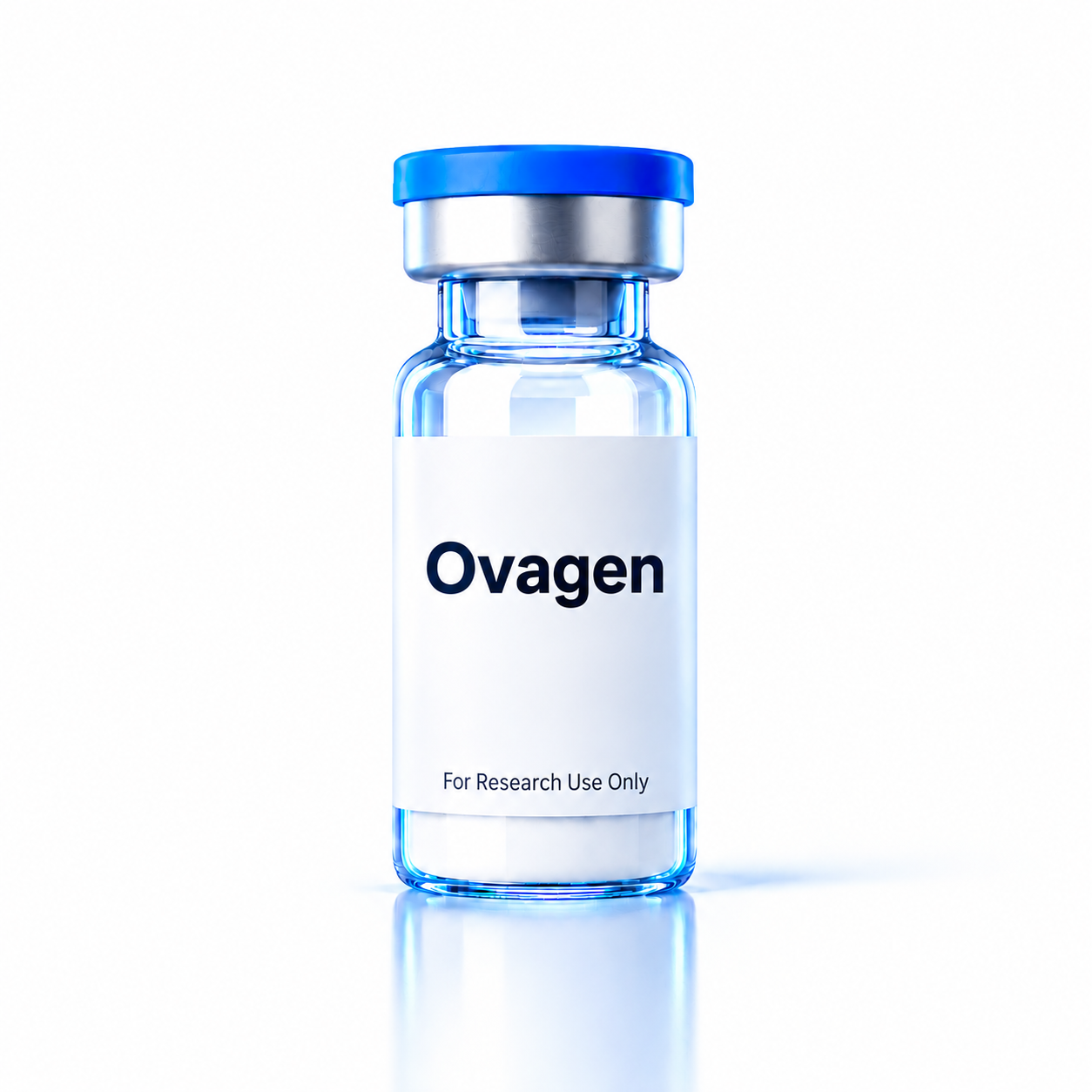
# Ovagen (EDL)
> ⚠️ Important Note: This peptide is for research use only and has not been approved as a drug by the FDA or EMA; all research is primarily based on in vitro and animal studies conducted by the Khavinson team in Russia. There is a lack of independent, large-scale human clinical evidence, and it cannot be claimed to treat any diseases. The name is misleading: Ovagen has nothing to do with the ovaries; it is a tripeptide that regulates the liver and gastrointestinal tract. There is also a veterinary follicle-stimulating hormone with the same name, but it is a completely different substance.
## Basic Chemical Information
– Aliases: EDL, H-Glu-Asp-Leu-OH
– Amino acid sequence: Glu-Asp-Leu (single letters: EDL)
– Molecular formula: \(\boldsymbol{C_{15}H_{25}N_3O_8}\)
– Molecular weight: 375.37 Da
– PubChem CID: 444128 | CHEBI: 137252
– CAS: No recognized official CAS number (the number 9046-70-2 circulating in the market refers to the veterinary hormone Ovagen; do not confuse the two)
– Appearance: White/off-white lyophilized powder; highly water-soluble; slightly acidic
– Storage: Lyophilized powder: Store at -20°C away from light; after reconstitution, store at 2–8°C for short-term use
## Research and Development Background
Also developed by Vladimir Khavinson at the St. Petersburg Institute of Bioregulation and Gerontology, this compound belongs to Cytogen’s series of tissue-specific short peptides (part of the same family as Chonluten, Epitalon, and Livagen).
The active fragment was initially isolated from calf liver extract and subsequently chemically synthesized into a pure tripeptide; it targets liver cells and gastrointestinal mucosal epithelium.
## Mechanism of Action (Khavinson School Hypothesis, purely a scientific theory)
The small-molecule tripeptide penetrates the cell membrane and nuclear envelope, interacting directly with DNA and chromatin to regulate gene transcription in target cells—a process distinct from traditional cell membrane receptor pathways:
1. Upregulates the hepatocyte proliferation marker Ki-67, promoting hepatocyte renewal and regeneration
2. Activates the Nrf2 antioxidant pathway, reduces ROS, and alleviates oxidative stress-induced liver damage
3. Downregulates apoptosis factors such as p53 and caspase-3, reducing hepatocyte apoptosis
4. Protects the gastrointestinal mucosal epithelial barrier and maintains normal turnover of gastrointestinal mucosal cells
5. Regulates the expression of genes related to liver detoxification and protein synthesis, alleviating chronic low-grade inflammation
## Research Focus (For scientific exploration only; no therapeutic efficacy is promised)
Key areas of in vitro and animal model research:
– Protection against chemical and alcohol-induced liver damage and liver fibrosis
– Functional decline in aging liver cells
– Repair of gastrointestinal mucosal damage and maintenance of the intestinal barrier
– Metabolism-related liver aging
> Comparison with other liver peptides in the same series:
> – Ovagen (EDL, tripeptide): Dual-target action on the liver and gastrointestinal mucosa
> – Livagen (KEDA, tetrapeptide): More focused on hepatocytes themselves, with an emphasis on liver repair
## Research Protocol (Literature Data)
Formulation: Lyophilized powder (subcutaneous)
– Study Duration: One treatment course lasts 10–30 days; may be repeated at 4–6-month intervals
– Research Dosage: 5–10 mg/day
Injections are primarily used for laboratory research.
## Risk Disclosure
– Very few independent human clinical trials have been conducted; long-term human safety data are insufficient
– The injectable formulation carries a risk of local irritation
– Cannot replace liver-protecting medications or standard gastroenterological treatments

评价
目前还没有评价