

| Specification | 20mg |
|---|
Peptide
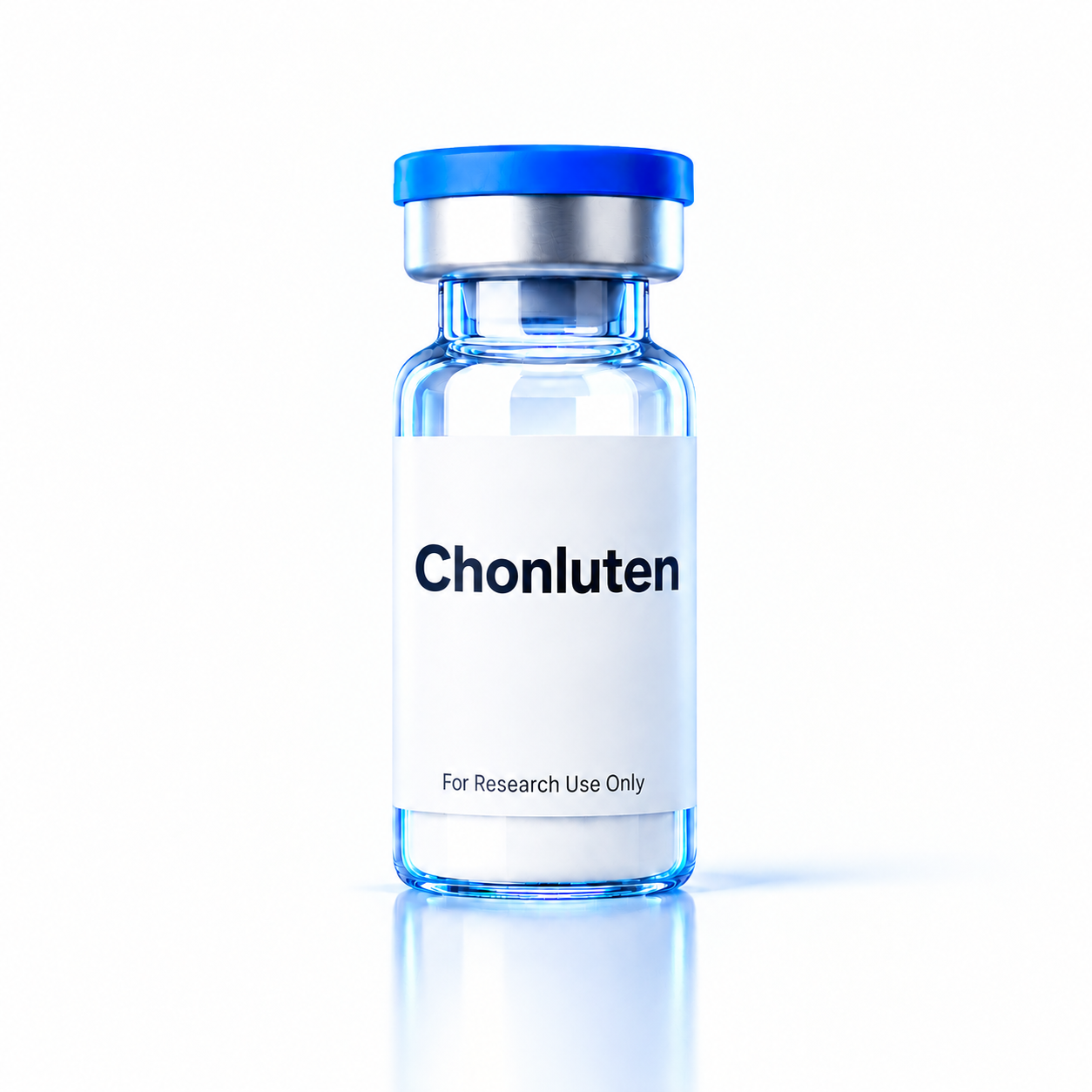
Chonluten CH20 20mg
$140.00
+ Free ShippingChonluten (EDG / T-34)
⚠️ Important Notice: This substance is currently classified solely as a research peptide and has not been approved as a drug by major regulatory agencies such as the FDA or EMA. Most related studies consist of in vitro and animal experiments, as well as early observational studies conducted in Russia; there is a lack of large-scale randomized controlled clinical trials in humans. It should not be used as a drug for the treatment of diseases.
Basic Chemical Information
– Synonyms: EDG tripeptide, T-34
– Amino acid sequence: Glu-Asp-Gly (glutamic acid – aspartic acid – glycine)
– CAS Number: 75007-24-8
– Molecular Formula: \(\boldsymbol{C_{11}H_{17}N_3O_8}\)
– Molecular Weight: 319.27 Da
– PubChem CID: 194641
– Appearance: Lyophilized powder; highly water-soluble
– Storage: Lyophilized powder at -20°C; store at 2–8°C for short-term use after reconstitution
#Research and Development Background
Developed by Vladimir Khavinson’s team at the Institute of Bioregulation and Gerontology in St. Petersburg, Russia, Chonluten belongs to the Cytogen series of tissue-specific bioregulatory short peptides. Other well-known peptides in this series include Epitalon, Cortagen, and Bronchogen. Chonluten is a tripeptide specifically targeting the bronchial mucosa and respiratory tract epithelium; it is often used in combination with Bronchogen, with Chonluten focusing on anti-inflammatory effects and ciliary function in the bronchial mucosa, while Bronchogen focuses on the repair of lung parenchymal cells.
# Mechanism of Action (Research Hypothesis)
The Khavinson School’s theory of short peptides: Small-molecule peptides can enter cells, penetrate the cell nucleus, and bind to specific ATTTC sequences in the DNA minor groove to regulate the expression of genes related to the respiratory tract epithelium—a process that does not follow the traditional receptor-binding model.
1. Regulates the differentiation of respiratory tract epithelial cells to maintain the integrity of the epithelial barrier
2. Modulation of alveolar macrophages to reduce pro-inflammatory cytokines such as TNF and alleviate chronic low-grade airway inflammation
3. Improvement of mucociliary clearance and regulation of mucus secretion
4. Antioxidant protection of the airways to mitigate oxidative stress damage
5. Support for local immune homeostasis in the airway mucosa
# Research Directions (For scientific exploration only; no guarantee of therapeutic efficacy)
In vitro, animal, and early observational studies focus on:
– Chronic bronchitis and airway damage caused by long-term smoking
– Respiratory tract aging and decline in lung function
– Mucosal repair following respiratory tract infections
– Enhancement of aerobic capacity and respiratory reserve in athletes
> Note: There is no high-quality clinical evidence demonstrating efficacy in treating lung diseases such as asthma or COPD
#Forms of Administration and Protocols (Research Data)
1. Dosage Forms: Lyophilized injections (subcutaneous), sublingual/oral capsules (dietary supplement, Russian market)
2. Typical Treatment Duration: One course of 10–20 days; 2–4 courses may be repeated annually;
3. Common Dosage: 5–10 mg/day;
# Risk Disclosure
– There is insufficient data on long-term safety in humans; the injectable formulation carries a risk of injection-related reactions;
– This is a research compound only and is not a substitute for standard pulmonary drug therapy;
– For research purposes only; human use is prohibited.
评价
目前还没有评价