

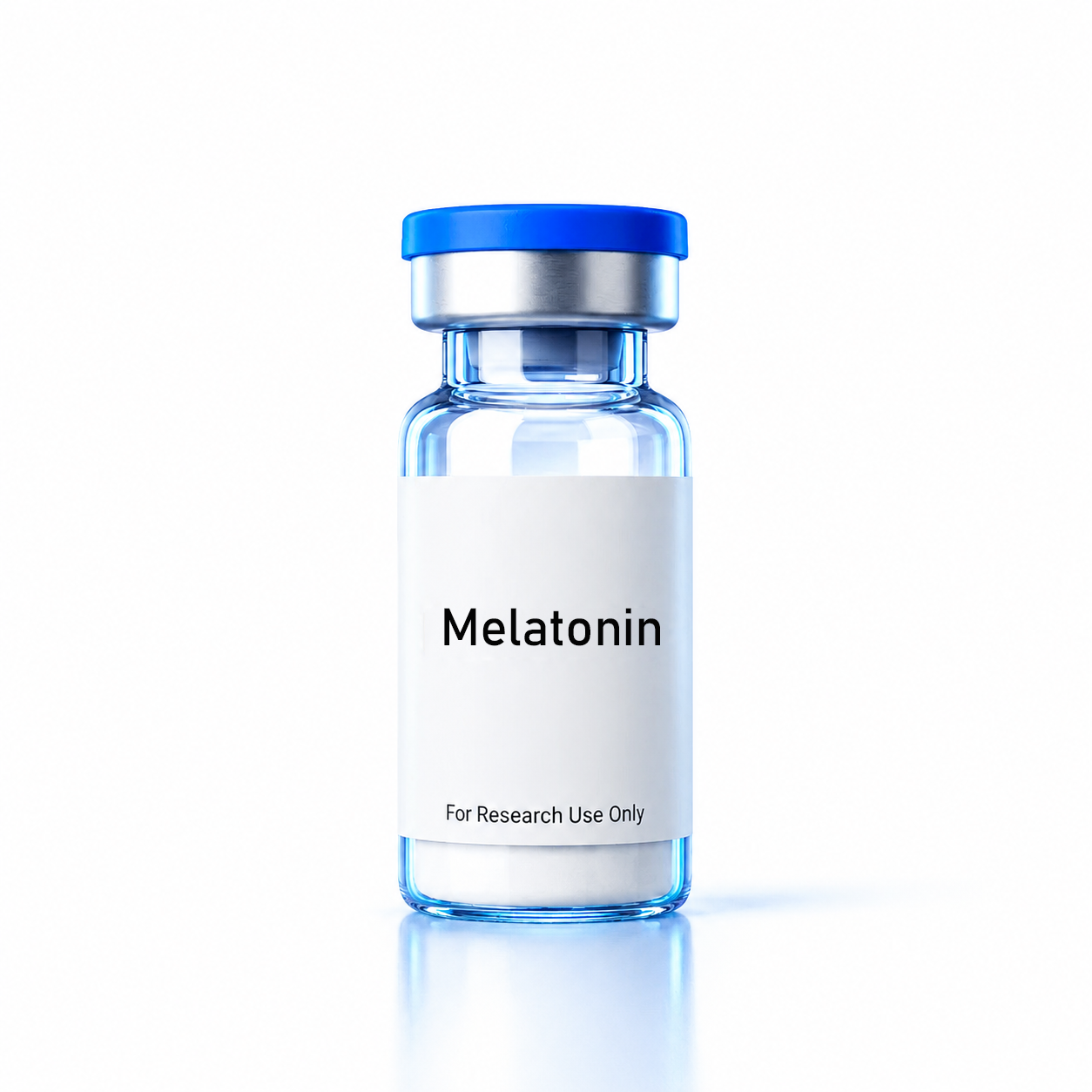
Melatonin
⚠️ For research use only. Not intended for human drug administration.
Basic Information
- CAS No.: 73-31-4
- Chemical Name: N-Acetyl-5-methoxytryptamine
- Formula: \(\boldsymbol{C_{13}H_{16}N_{2}O_{2}}\)
- Molecular Weight: 232.27 Da
- Appearance: White or off-white crystalline powder
- Solubility: Slightly soluble in water, soluble in ethanol, DMSO
- Storage: Sealed at -20℃, protected from light and moisture
- Half-life: ~20–60 min in plasma
Mechanism of Action
Melatonin is an indole hormone mainly secreted by the pineal gland. It exerts biological effects via MT1 & MT2 G-protein coupled receptors, plus direct non-receptor antioxidant activity.
- Binding to MT1/MT2 receptors in suprachiasmatic nucleus (SCN) to regulate circadian rhythm, reduce body temperature and induce sleepiness.
- Powerful direct free-radical scavenger; activates Nrf2 pathway to boost endogenous antioxidant enzymes.
- Inhibits NF-κB, suppresses pro-inflammatory cytokines (TNF-α, IL-1β, IL-6), shows anti-inflammatory and neuroprotective effects.
- Modulates immune function, mitochondrial protection and reproductive endocrine signaling.
Research Applications
- Circadian rhythm, jet lag & sleep disorder research
- Antioxidant, anti-inflammation & neuroprotection studies
- Mitochondrial damage and aging-related models
- Immune regulation and oncology related preclinical research
Key Note
Distinguish: Melatonin (melatonin hormone) vs MT1/MT2 (melanocortin receptors for Melanotan peptides). They are unrelated targets.
评价
目前还没有评价